
Women at the Forefront
Women’s Roundtable
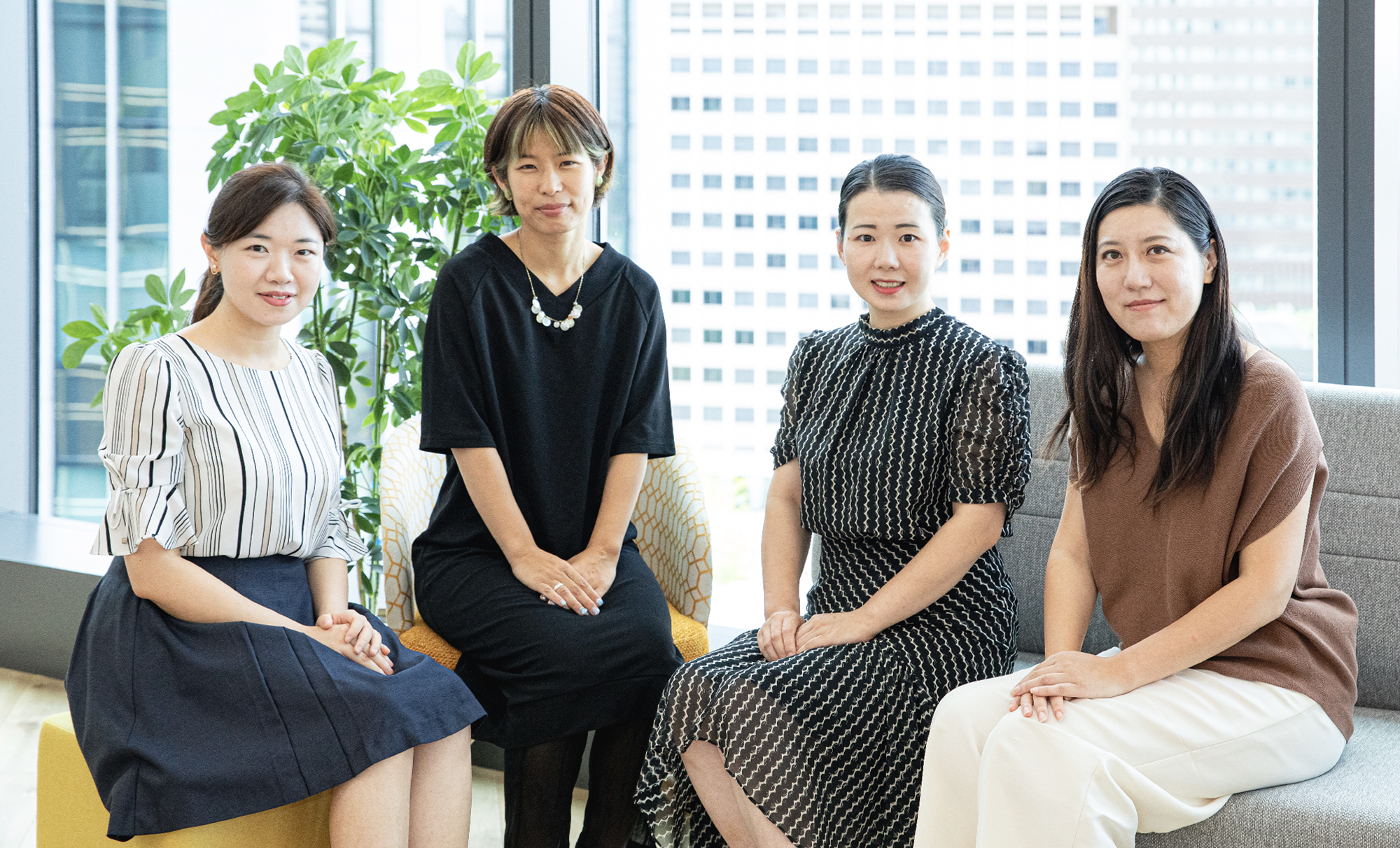
We brought together three working mothers and two female managers at HighChem, each playing an active role in their respective positions, to discuss HighChem’s culture and workplace environment from their unique perspectives as women.
members
-
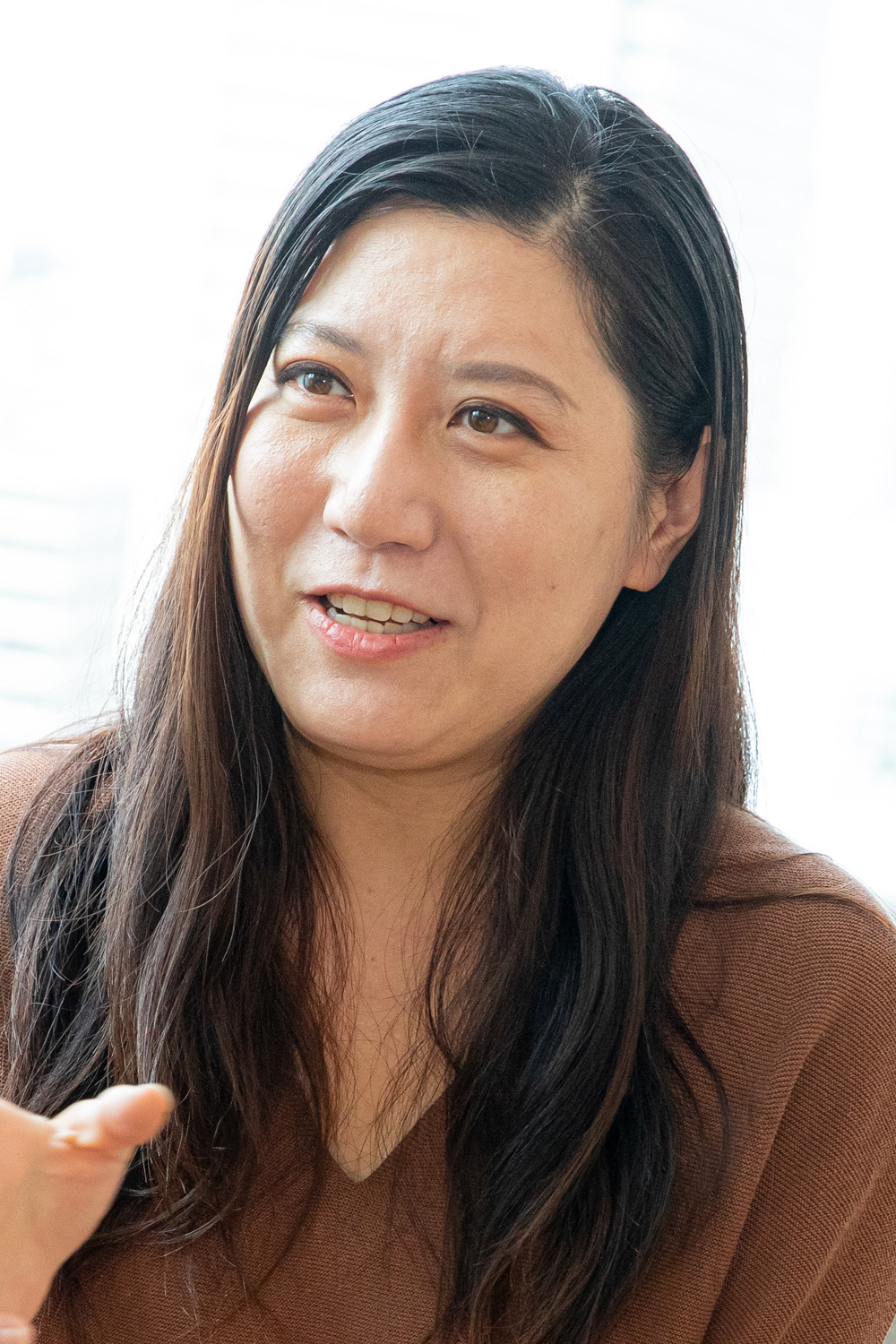
Joined HighChem in Jan. 2008
Industrial Chemicals Sec. #2
Industrial Chemicals Dept.
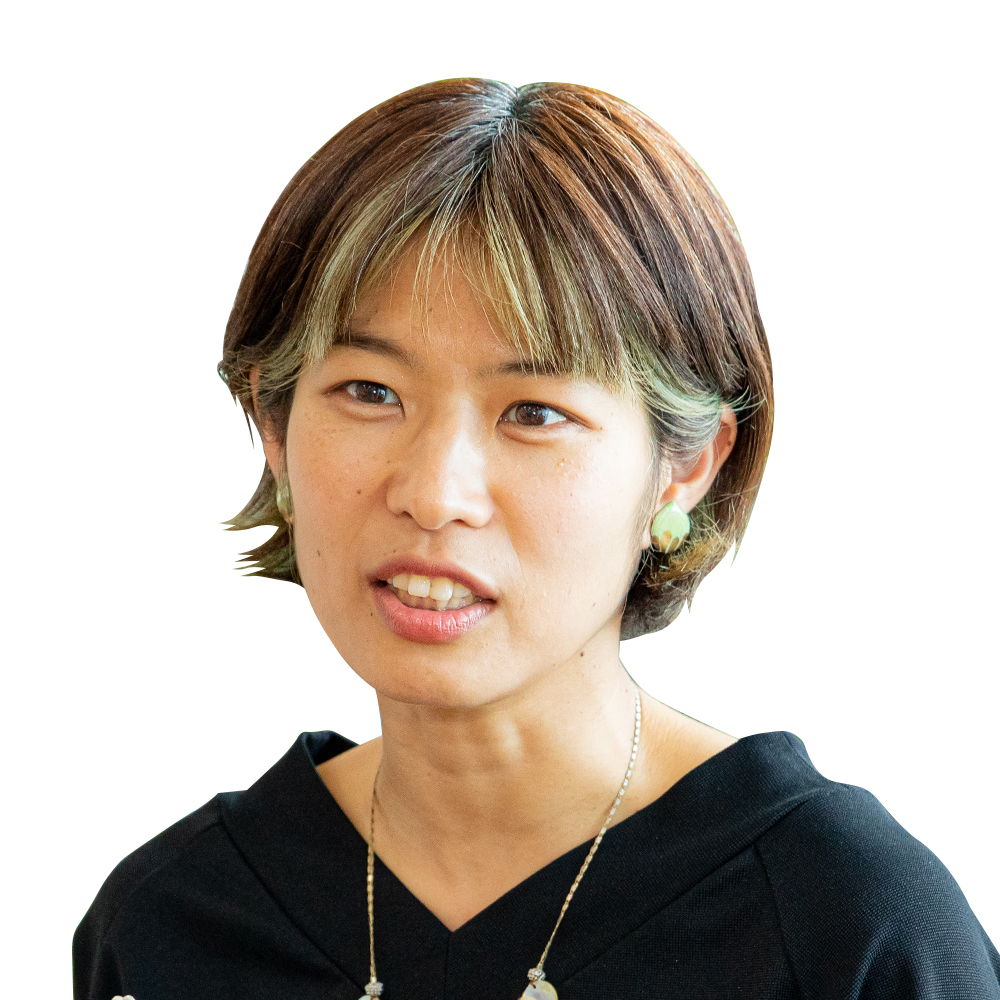
Section Chief CEarned bachelor’s and master’s degrees in Japan. Joined HighChem as a new graduate, drawn to its business and her experience at a Japanese chemical manufacturer. Currently leads the Functional Chemicals 2 team, overseeing the group and developing new products. A mother of two.
Earned bachelor’s and master’s degrees in Japan. Joined HighChem as a new graduate, drawn to its business and her experience at a Japanese chemical manufacturer. Currently leads the Functional Chemicals 2 team, overseeing the group and developing new products. A mother of two.
-
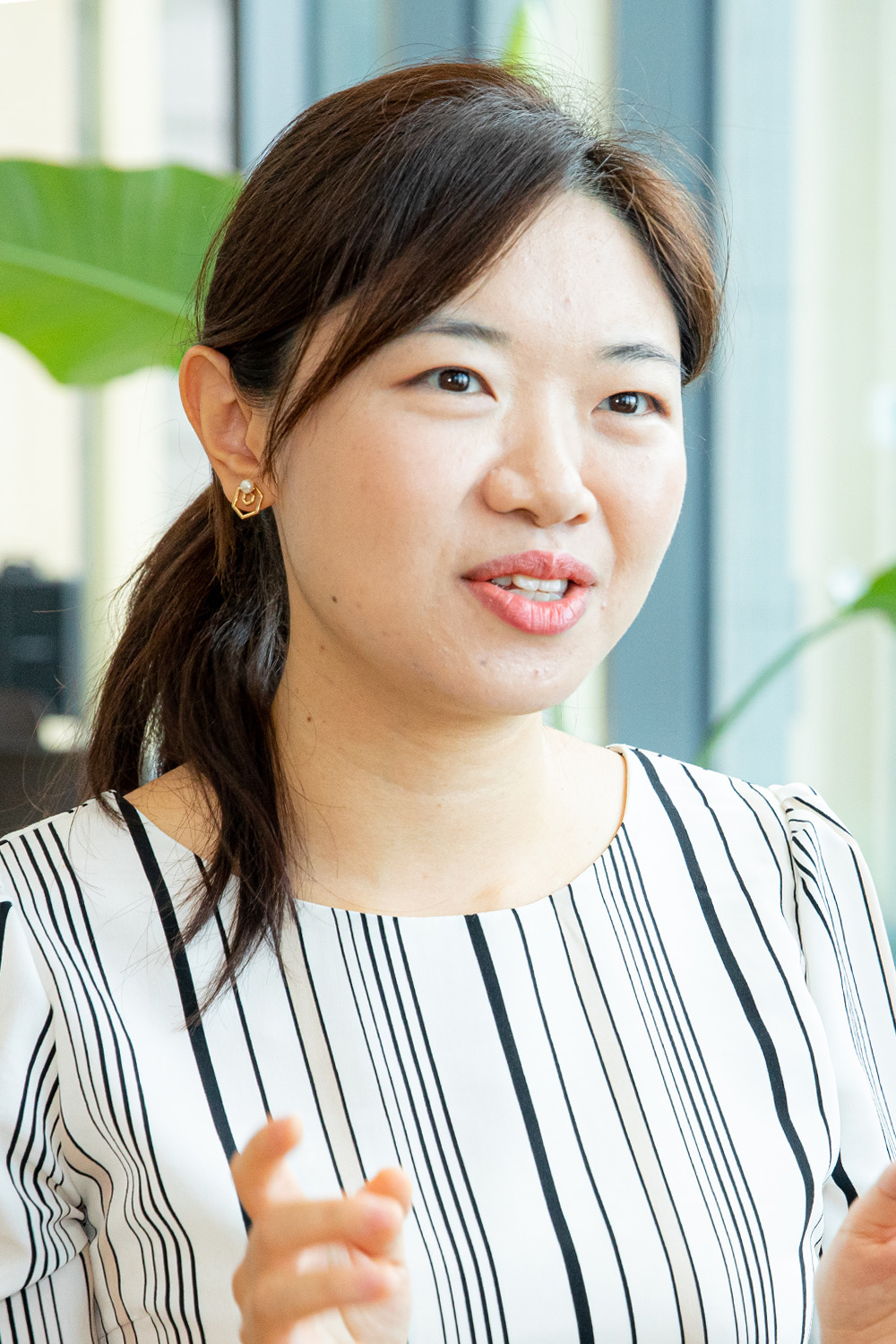
Joined HighCHem in Aug. 2012
Electonic Materials Dept.
Electronic & Environmental Materials Dept.
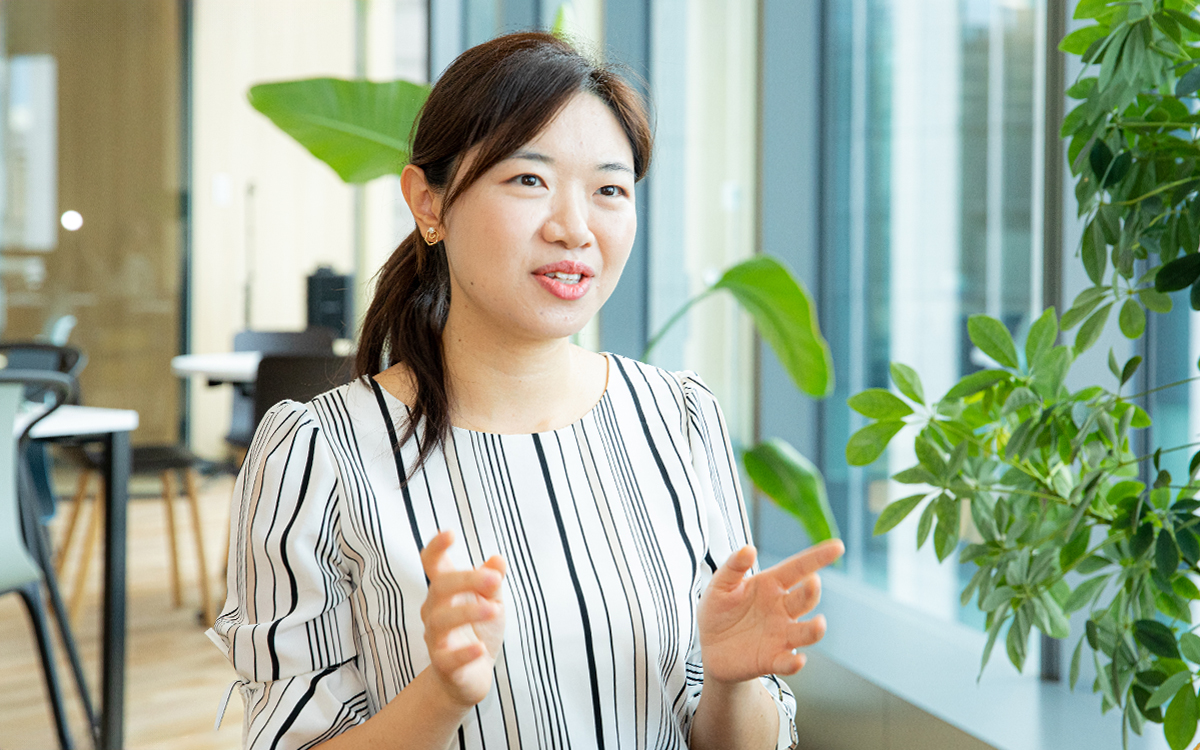
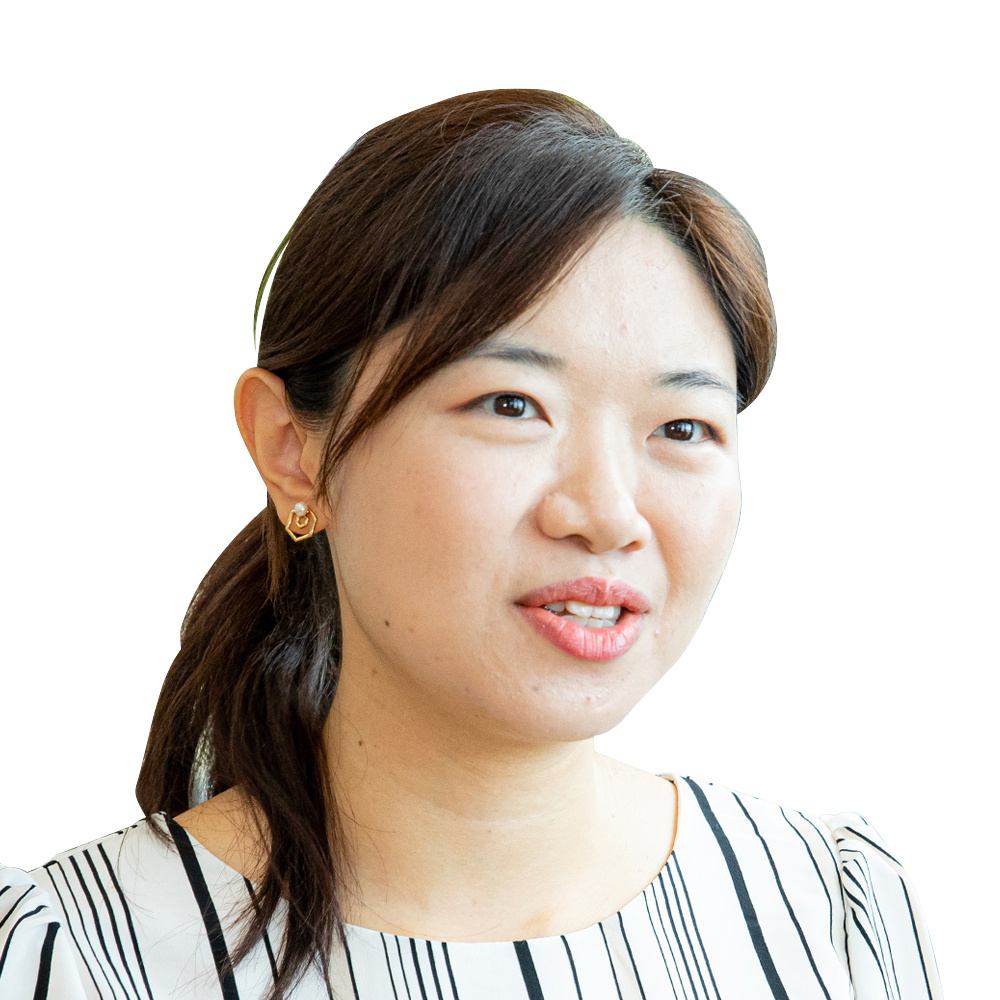
Specialist Section Chief HStudied Japanese at Beijing Institute of Technology and China Foreign Affairs University, earning bachelor’s and master’s degrees. Joined HighChem after an internship at a major Japanese company. Currently handles sales of electronic materials, including semiconductor materials. Specializes in new business development and has received multiple internal awards.
Studied Japanese at Beijing Institute of Technology and China Foreign Affairs University, earning bachelor’s and master’s degrees. Joined HighChem after an internship at a major Japanese company. Currently handles sales of electronic materials, including semiconductor materials. Specializes in new business development and has received multiple internal awards.
-
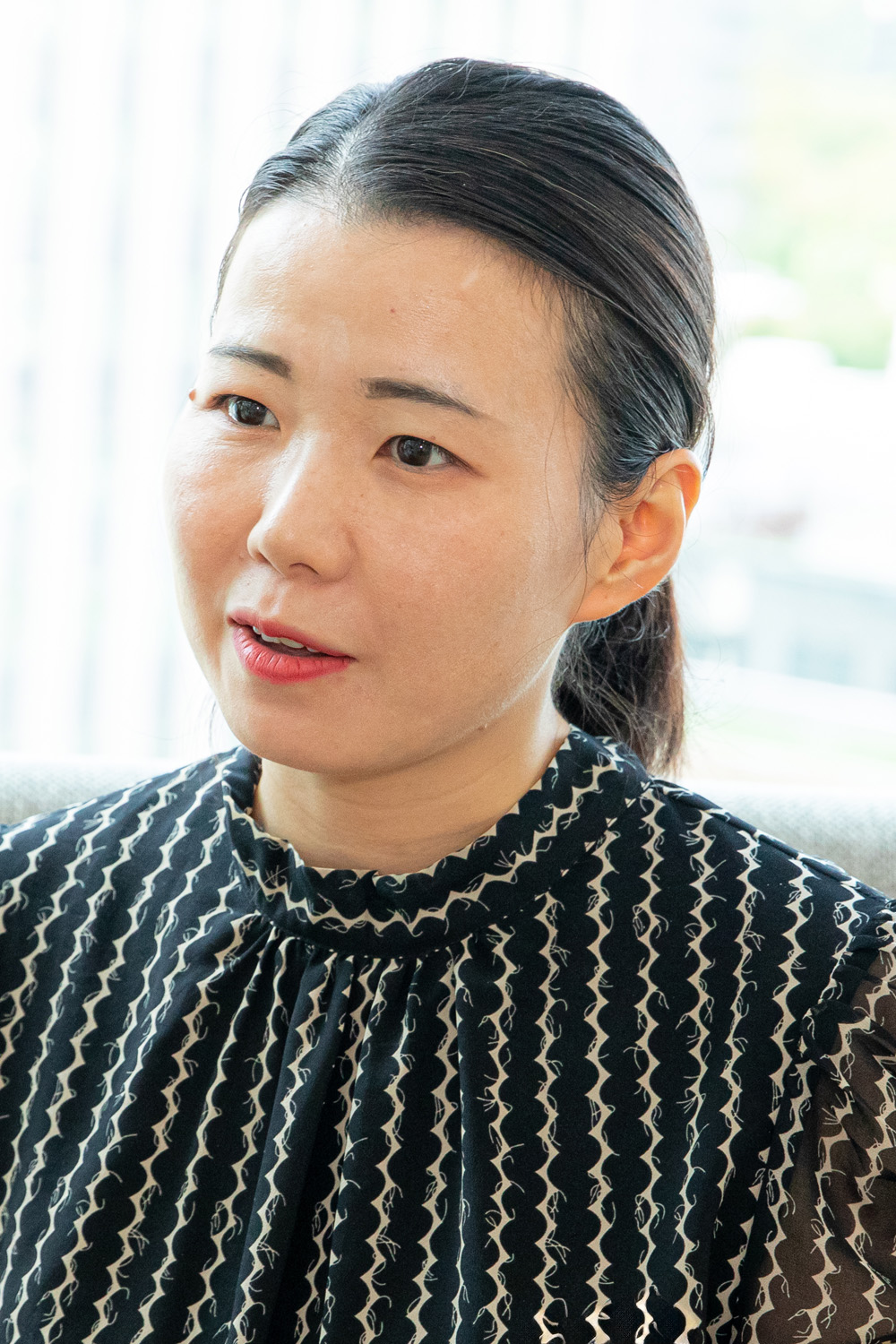
Joined HighChem in Aug. 2014
Functional Chemicals Dept.
Chemical Products Div.
Ms. DStudied analytical chemistry at Hunan University, earning bachelor’s and master’s degrees. Joined HighChem after an internship during graduate school. Currently handles OEM projects in China in the Functional Chemicals Department. A mother of one.
Studied analytical chemistry at Hunan University, earning bachelor’s and master’s degrees. Joined HighChem after an internship during graduate school. Currently handles OEM projects in China in the Functional Chemicals Department. A mother of one.
-
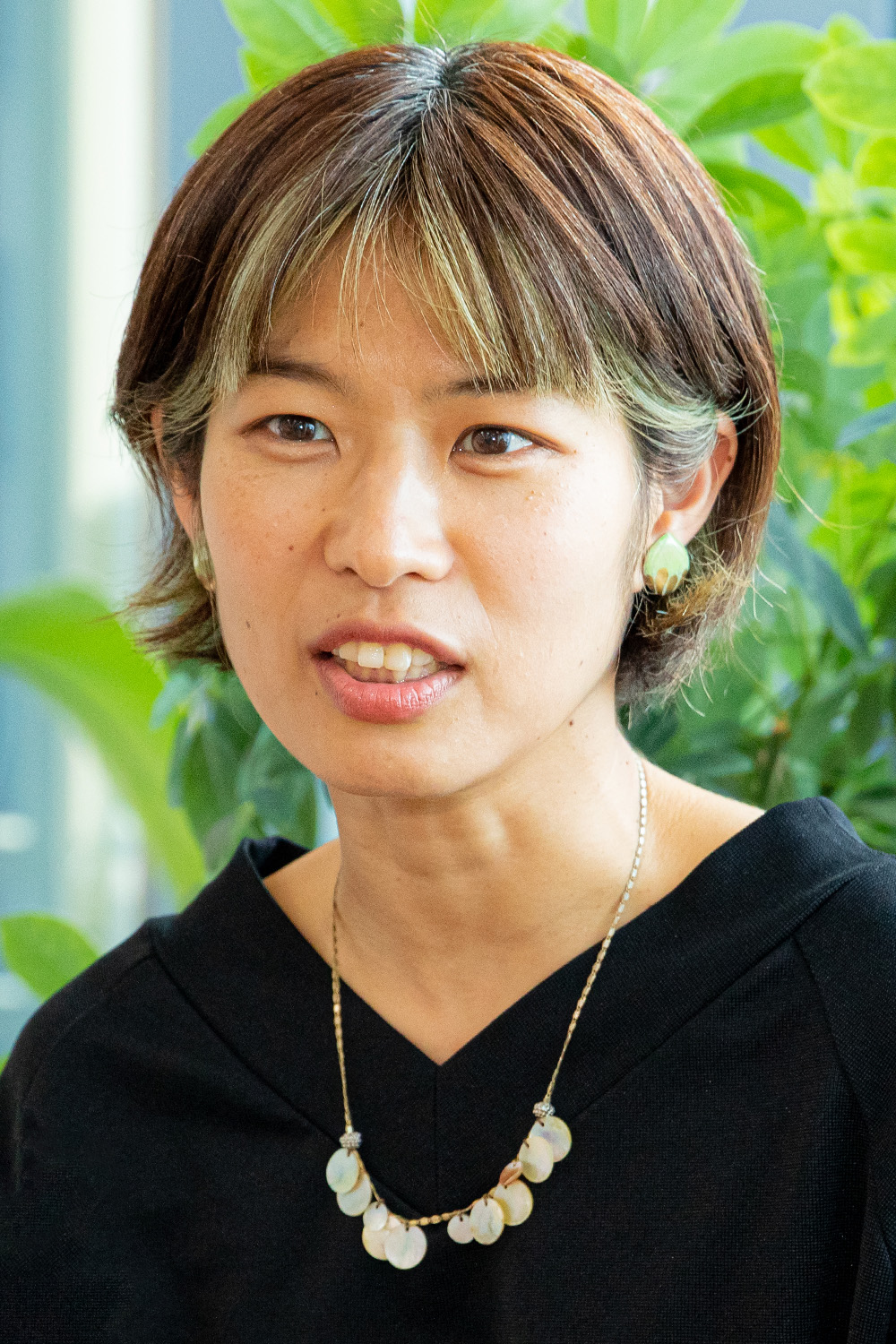
Joined HighChem in Jan. 2021
Logistics Sec.
Business Affairs Dept.
Ms. AHandled international trade at a major Japanese company after university. Joined HighChem, attracted by its chemical business and international environment. Currently handles logistics, including regulatory research and applications for products subject to import restrictions. A mother of two.
Handled international trade at a major Japanese company after university. Joined HighChem, attracted by its chemical business and international environment. Currently handles logistics, including regulatory research and applications for products subject to import restrictions. A mother of two.
HighChem’s Culture: A Place Where Individuality and Freedom Can Be Expressed
What kind of culture do you feel at HighChem?
-
H
There are a lot of Chinese employees. (laughs)
-

ALL
That’s true. (laughs)
-
H
Compared with a typical Japanese company, I don’t think HighChem has a particularly formal atmosphere. It’s a fairly flat organization.
-
A
I agree.
-
H
Also, we’re quite close to our managers. It’s easy to make suggestions, ask for advice, and express our opinions.
I’ve heard that at many Japanese companies, even when you consult with your manager, it can be difficult to get your proposals approved. At HighChem, if a proposal can contribute to the company’s sales and profits, it is often accepted. -
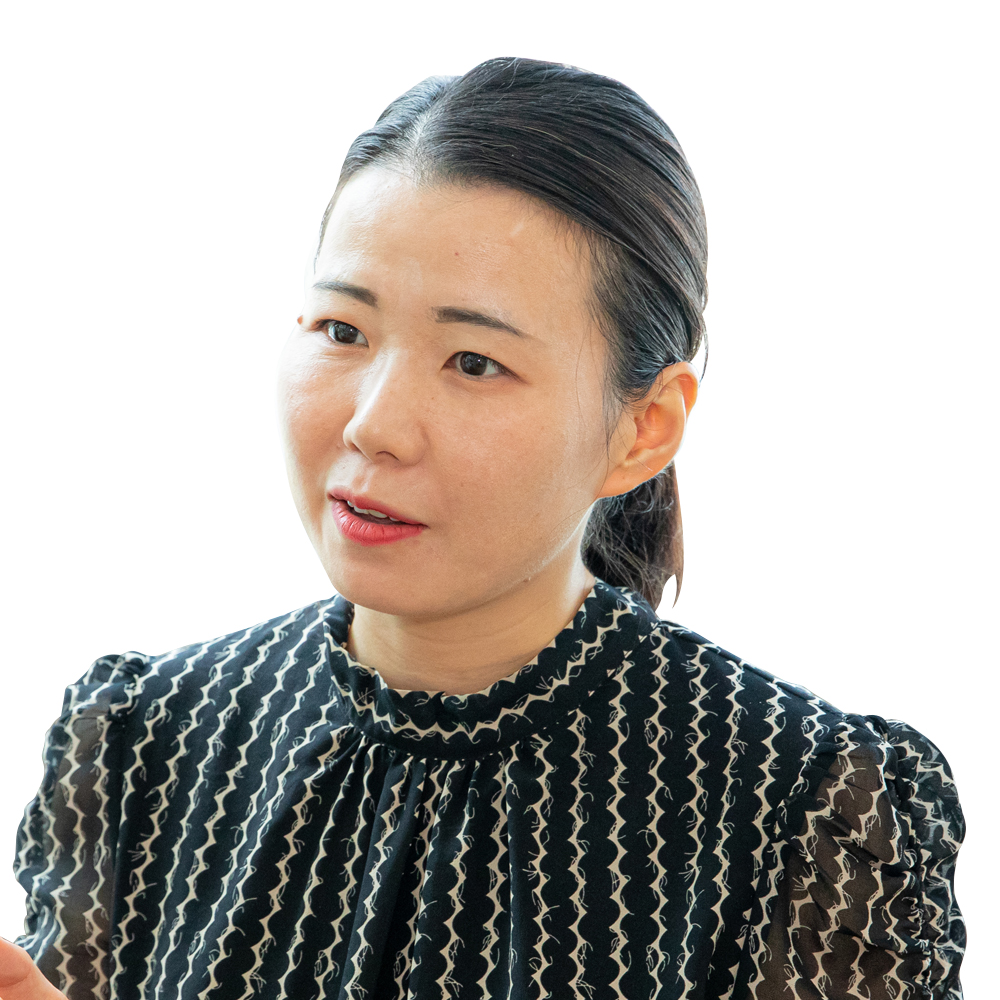
D
That’s true. If there’s something you want to take on, you generally get positive feedback. And when there are areas where you lack experience or expertise, your manager provides the support you need. They openly share their networks and connections, without holding anything back, and make sure information is shared properly.
I think that’s true of managers across HighChem. They generally trust you to handle things on your own without micromanaging. But when there’s a complaint or something you can’t handle by yourself, they step in and support you. -
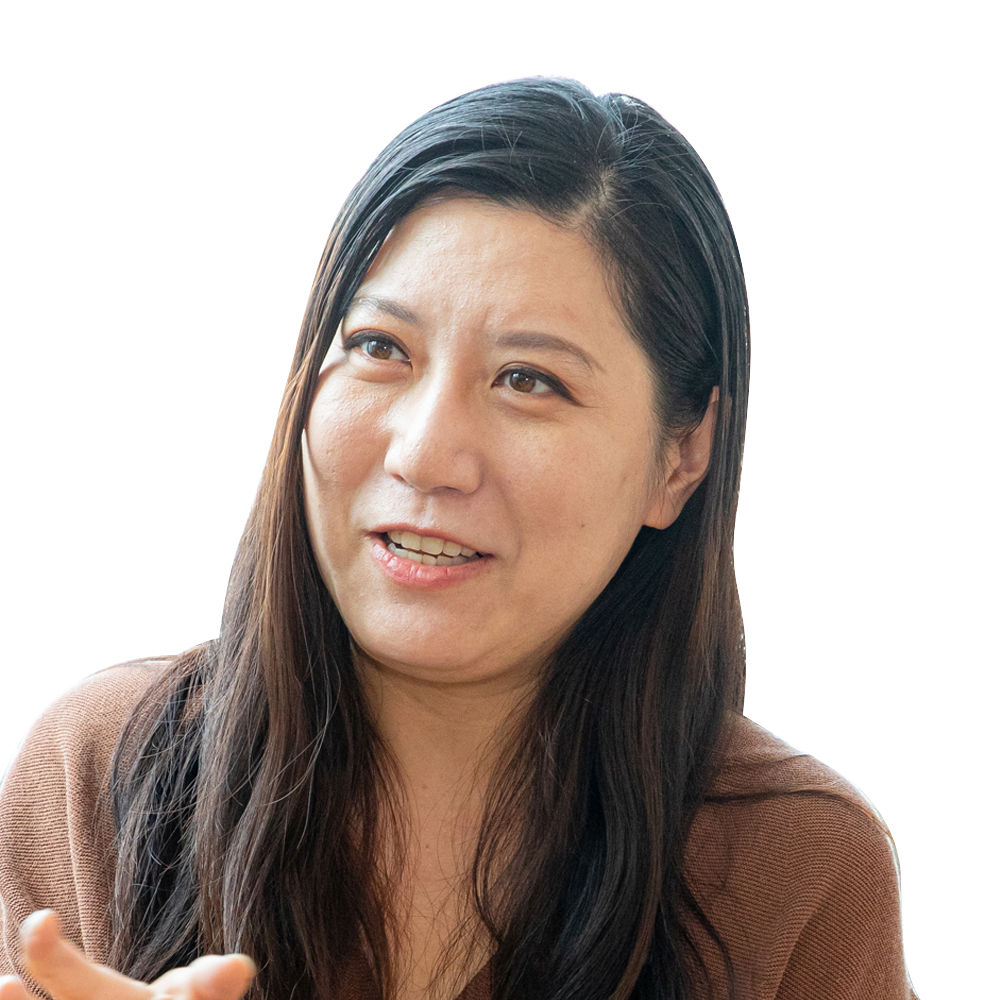
C
At HighChem, salespeople first find the products they will be responsible for from scratch. Once a deal is established, they handle everything themselves through to delivery to the customer. They need to have a thorough understanding of everything from payment procedures to logistics, which really helps them develop their skills. That’s why each salesperson has such strong individual capabilities.
I think being able to choose your own areas of focus is possible because the company gives employees a certain degree of freedom. Rather than simply doing the work assigned to you, you find something you want to pursue, discuss it with your manager, put it into action, and turn it into results. We’ve developed a culture where this process happens naturally. I think that’s one of the reasons the company continues to grow. -
A
確かに、皆さんが「個人の責任」できちっと仕事をしているという感じがすごくしますね。「自由」ってすごく責任が伴うものだと思うんです。
そこをやっぱりハイケムの社員は一人ひとりが理解しているから、会社も上司も「自由」にやらせてくれているんじゃないでしょうか。
Verification: Is HighChem a company where women can work comfortably?
Answer: A company where moms can also work comfortably
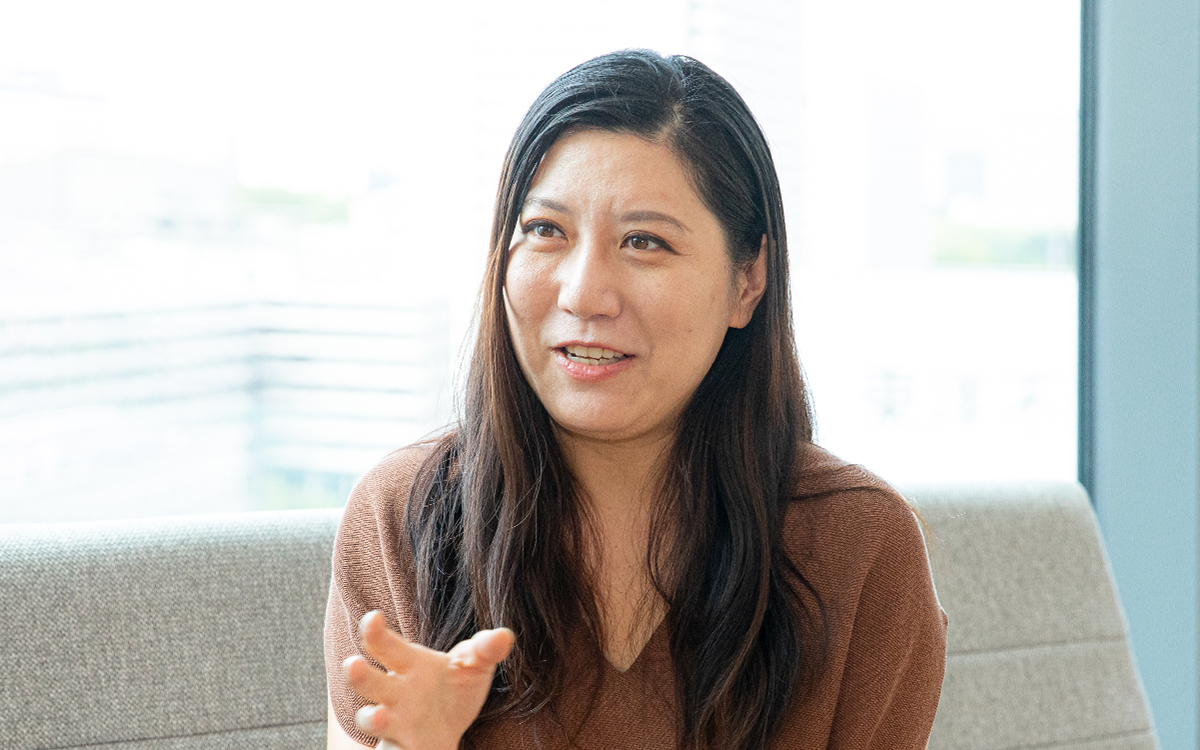
Is HighChem a good place for women to work?
-
ALL
I don’t think gender really matters here.
-
D
Women might even be stronger. (laughs)
-
C
There’s not really a sense that women are there to provide support. In sales, being a woman or having a humanities background doesn’t mean you’re expected to play a supporting role. It’s purely merit-based.
-
D
Cultural factors in China may also play a role. In China, gender generally doesn’t matter much in the workplace.
A workplace friendly to mothers
-
C
I think HighChem is also a very supportive workplace for moms.
I have taken maternity and childcare leave twice, and after returning, I was able to resume both my work and position. Even when I need to take time off because my child is sick, I never feel any resentment from those around me. -
D
I returned from childcare leave this March, and some of my Japanese mom friends returned to work on reduced hours or were transferred to different positions. One of the great things about HighChem is that you can make these decisions for yourself. That includes whether to work reduced hours and whether to remain in sales. There is never an assumption that “because you have children, you can’t work in sales.” I think HighChem is also a great company for moms when it comes to building their careers.
Maternity and Parental Leave at HighChem
C and D have both taken maternity and childcare leave at HighChem. How were their responsibilities handled during their leave, and what was it like after they returned?
-
D
I took one year and two months of maternity and childcare leave and returned this March. During my leave, my responsibilities were shared among the team. What made me happy was that, although this meant taking on more work, my colleagues welcomed the opportunity rather than seeing it as a burden. It gave them a chance to learn about new customers and products and communicate more with customers.
After I returned, I discussed things with my manager and colleagues and divided my responsibilities between those that made sense for me to take back and those that they would continue handling. These decisions were made with everyone’s agreement. -
C
In my case, being a manager may have made things easier because I was not handling as many individual tasks. When I returned, my connections with customers and other factors were taken into consideration, and I was able to return to my original role and responsibilities. I’m truly grateful for that.
Reduced Hours, Overtime, Paid Leave, etc.
Do you all use the reduced-hours work system?
-
D
I work full-time without using reduced hours.
-
C
I also returned to work full-time. I think this is possible because childcare services in Japan are well established.
-
A
I also work full-time. HighChem has very little overtime, so I can usually leave work on time.
-
C
That’s right. I also generally don’t work overtime. Sometimes I take unfinished work home, but I don’t really consider that overtime because I take responsibility for my work. I can do it outside the office, so it doesn’t feel like overtime to me.
-
D
I also usually leave on time without working overtime, and sometimes finish up work after my children go to bed. Like C said, I don’t really consider that overtime either.
-
A
I think having very little overtime is one of HighChem’s good cultural traits. In Japan, there is still a culture where overtime is often taken for granted. You even see job postings proudly stating things like “approximately 25 hours of overtime per month.” When I interviewed at HighChem, they asked me, “Would you be able to work until around 6 p.m.?” Since overtime was clearly not expected, I felt that HighChem would be a comfortable place to work even with children.
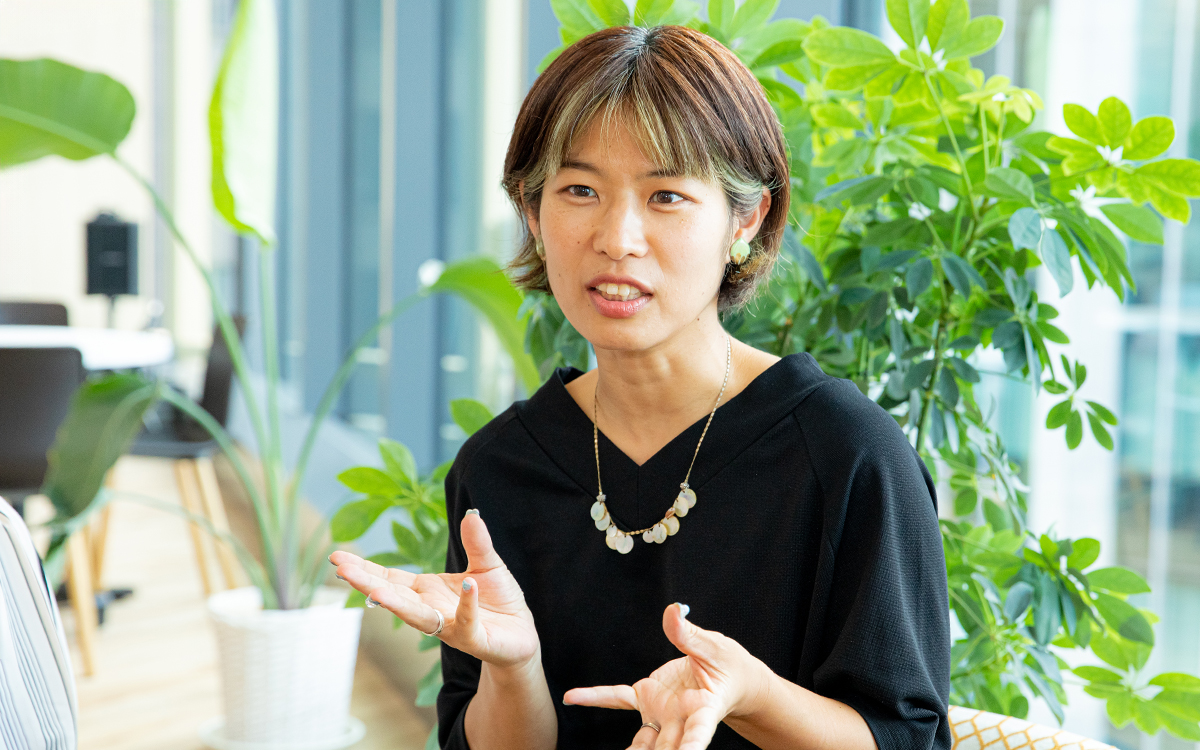
As a mom, you’re responsible for another person’s life, so having limits on your working hours is essential. There are also set hours for how long children can stay at daycare.
-
D
Exactly. I think HighChem is a really supportive workplace for women because overtime isn’t expected.
-
H
I’m the type who works overtime before taking time off or going on a business trip. But as we were talking about responsibility earlier, I make sure to take time off at my own pace. In that sense, I think it’s great that we can adjust our schedules to suit our own rhythm. We each take responsibility for finding the right balance between work and time off.
I’ve heard that taking paid leave can be difficult at typical Japanese companies, but that’s not the case at all at HighChem. As long as I finish my work properly, there’s no particular problem with taking time off whenever I want. If an urgent matter comes up while I’m away, I can also respond through the company’s dedicated social media or by phone. -
A
It really is easy to take paid leave here. At my previous company, before the law requiring employees to take paid leave came into effect, there were times when I could only take paid leave once a year. I had to tell my manager the reason about a week in advance and designate someone to take over my work while I was away, so it was quite a big process. I couldn’t take paid leave as casually as I can at HighChem. As a mom, there are many times when you need to take time off because your child has a fever, so I’m really grateful for that.
Do moms in sales also have opportunities to travel to China for business?
-
C
Yes, we do. Before COVID-19, I would travel to Shanghai with my child, leave my child with my parents, and then travel around China for business. I couldn’t do that during COVID-19, but now my parents are able to stay in Japan due to visa arrangements, so I can leave my child with them and travel for business again.
-
D
I also have my parents come to Japan to help with childcare.
In China, grandparents tend to be actively involved in raising their grandchildren, don’t they?
-
D
Yes. That’s part of Chinese culture, and it’s a great help when working full-time.
Are there differences in the way women are viewed in the workplace in China and Japan?
Answer: Yes
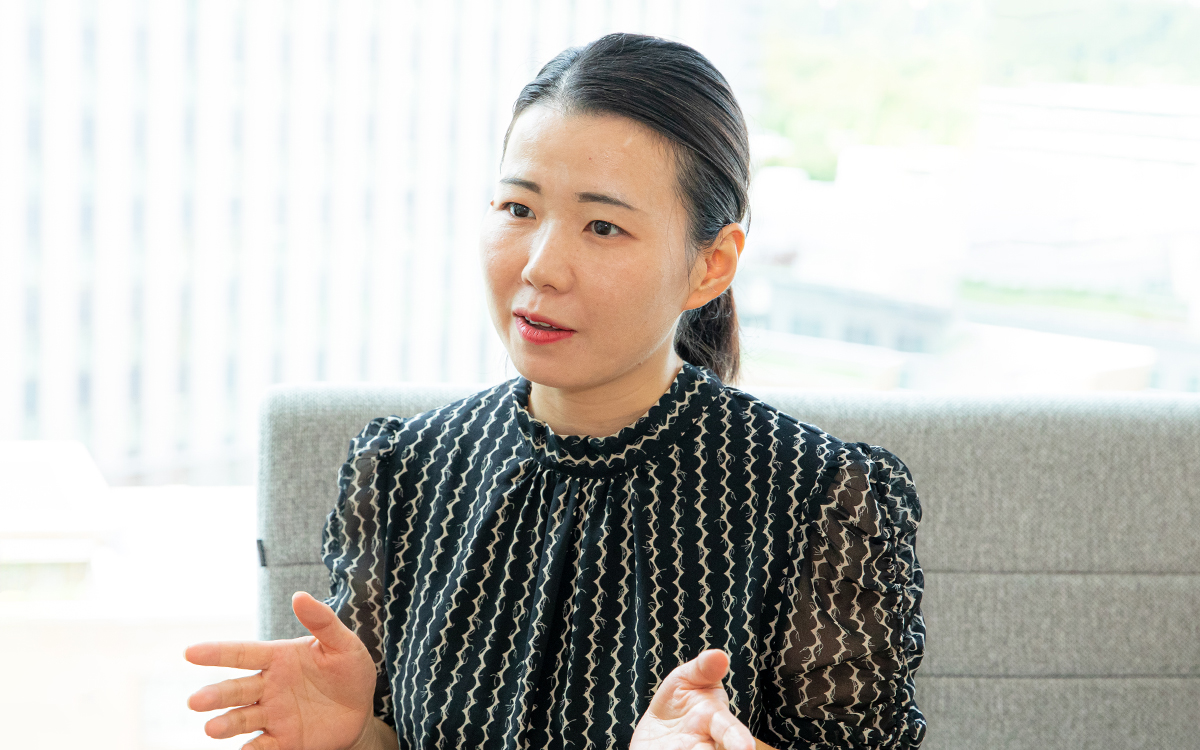
Do you think there are differences between China and Japan in how working women are viewed?
-
A
In Japan, as is often said, I think women still face difficulties in the workplace. Fewer women are leaving their jobs after getting married, but I think there are still cases where female university graduates are viewed as less desirable hires because of the perceived risk that they may leave the company after getting married or becoming pregnant.
In fact, once you get married and continue working, people may ask, “Are you taking good care of your husband?” Once you become a mother, that pressure becomes even stronger. If you go to a company drinking party, people may say, “But you’re a mother,” while if you don’t go, they may say, “That’s just how mothers are.” I think a significant number of women working at Japanese companies probably feel that it is difficult to balance work and society’s expectations.
I think there are still strong assumptions throughout society about how women “should” be.
How about China?
-
C
I grew up in an environment where both my parents worked, and so did my grandparents.
-
D
Right. So it’s common for grandparents to help take care of the children, and culturally, there isn’t as much of an expectation to leave your job because you get married or become pregnant.
-
C
If you want to work, you can work, and I think society provides a path that supports that choice.
Future Goals as a Company Person, as a Mother, and as a Woman
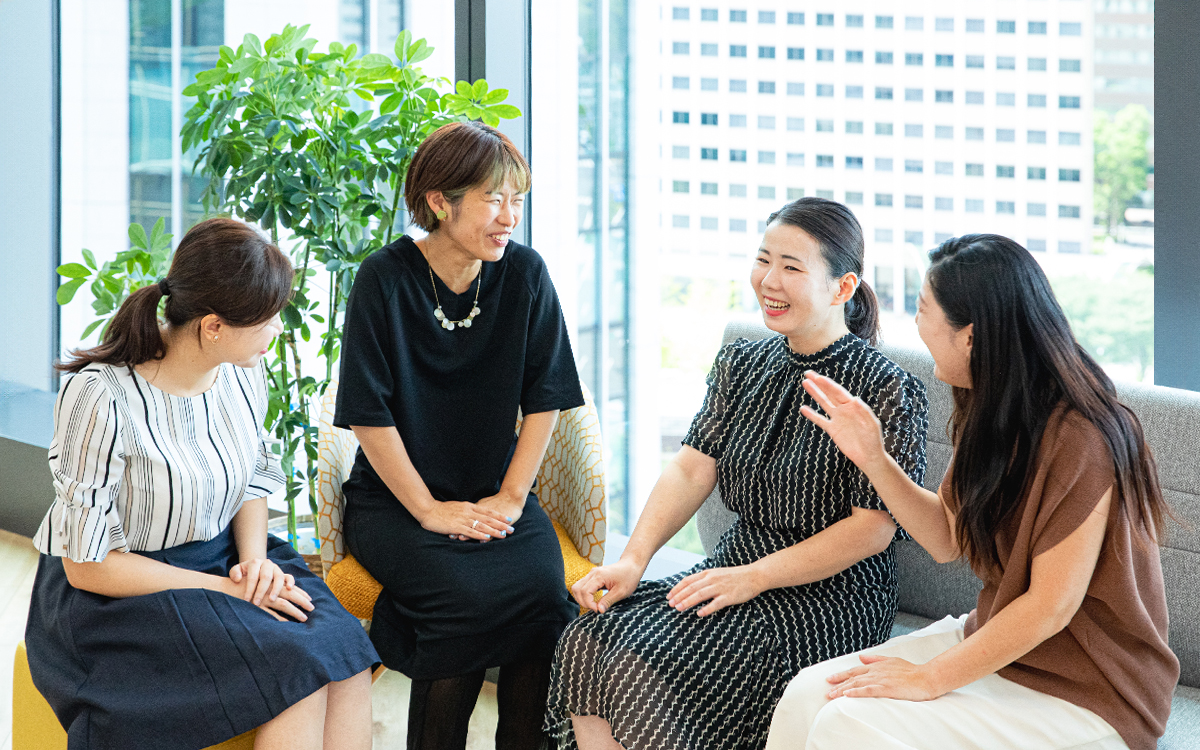
Finally, could you tell us about your goals for the future?
-
C
I’m always thinking about this, but I want to work in a way that makes the people around me say, “I’m glad C is here.”
-
H
I’m currently mainly responsible for developing new business, and a new employee joined our team this month. Over the next two or three years, my goal is to develop new employees while getting our new business up and running. Once it’s on track, I’d like to get married and take maternity leave, just like C and D. (laughs)
-
D
Since having a child, I’ve become much more conscious of wanting to grow as a person. I’ve been thinking a lot about why I work and what I can show my child as a mother.
-
A
As a Japanese employee at a company with many Chinese employees, I have knowledge of Japanese customs procedures and trade regulations, so I’d like to put that knowledge to use in HighChem’s business. I want to use my strengths to contribute to new businesses and business expansion promoted by HighChem and help the company grow. I still have a lot to learn, but I hope to continue growing together with the company.