
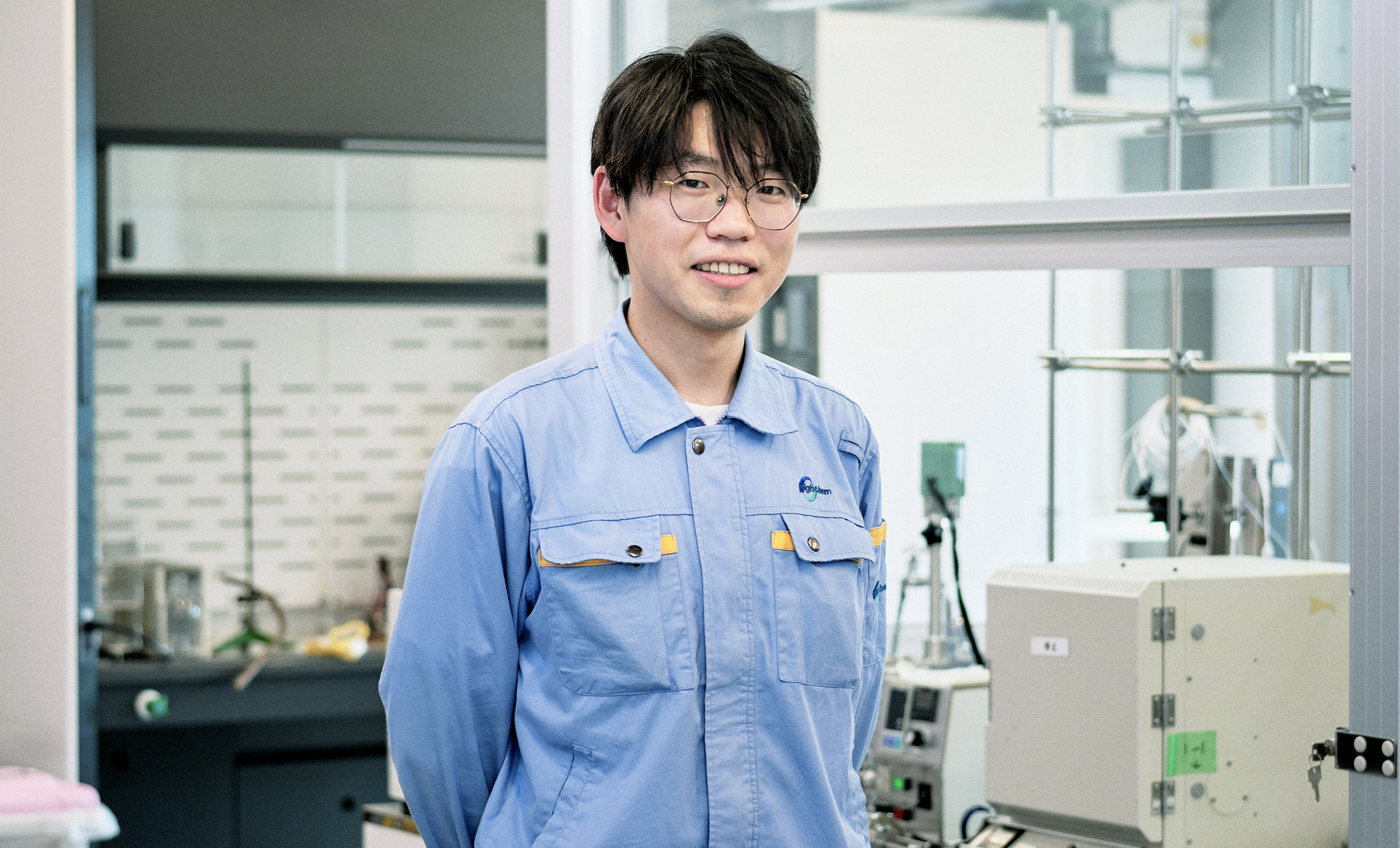
From University to Industry—
A Researcher’s Path Toward Bringing Technology to Society
Organic Polymer Team, HighChem Tokyo Research Center
Y
-
CAREER
- 2022
- Graduated from Nanjing University of Engineering, Department Energy Science.
- 2024
- M.S. in Environmental Science, Graduate School of Environmental Science, Hokkaido University
- 2024−
- Joined HighChem Tokyo Research Center as a Researcher
-
Why HighChem
What Made You Decide to Join HighChem?
When I was in graduate school, my academic advisor introduced me to HighChem, telling me that the company was engaged in the R&D of biomass plastics, including polylactic acid, and was also conducting joint R&D projects with Hokkaido University. This was my first opportunity to learn about HighChem, and it sparked my interest in the company.
While I was still a student, I had the opportunity to interact with researchers at HighChem. Seeing their warm personalities and sincere approach to research, I felt that “this is a place where I can do meaningful research,” which ultimately led me to decide to join the company.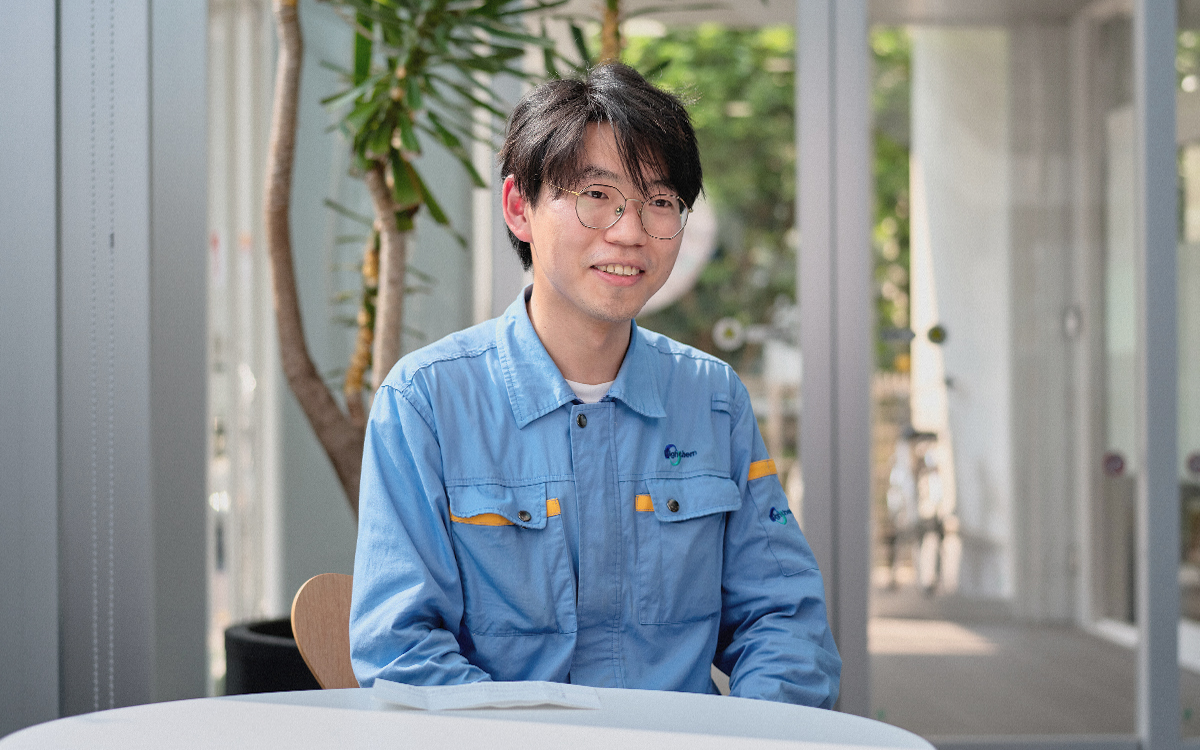
Why Did You Choose a Research Career in Industry Instead of Pursuing a Ph.D.?
While working within a university, there are limited opportunities to see what kinds of technologies are actually being adopted and how they are being used in society. I felt there was a gap between academic knowledge and technologies that can be put into practical use, and I wanted to be involved in developing green technologies that can make a real contribution to society. HighChem’s research on biomass plastics aligned closely with this goal, so I chose to pursue a research career at the company’s research center.
-
Responsibilities
What Does Your Current Role Involve?
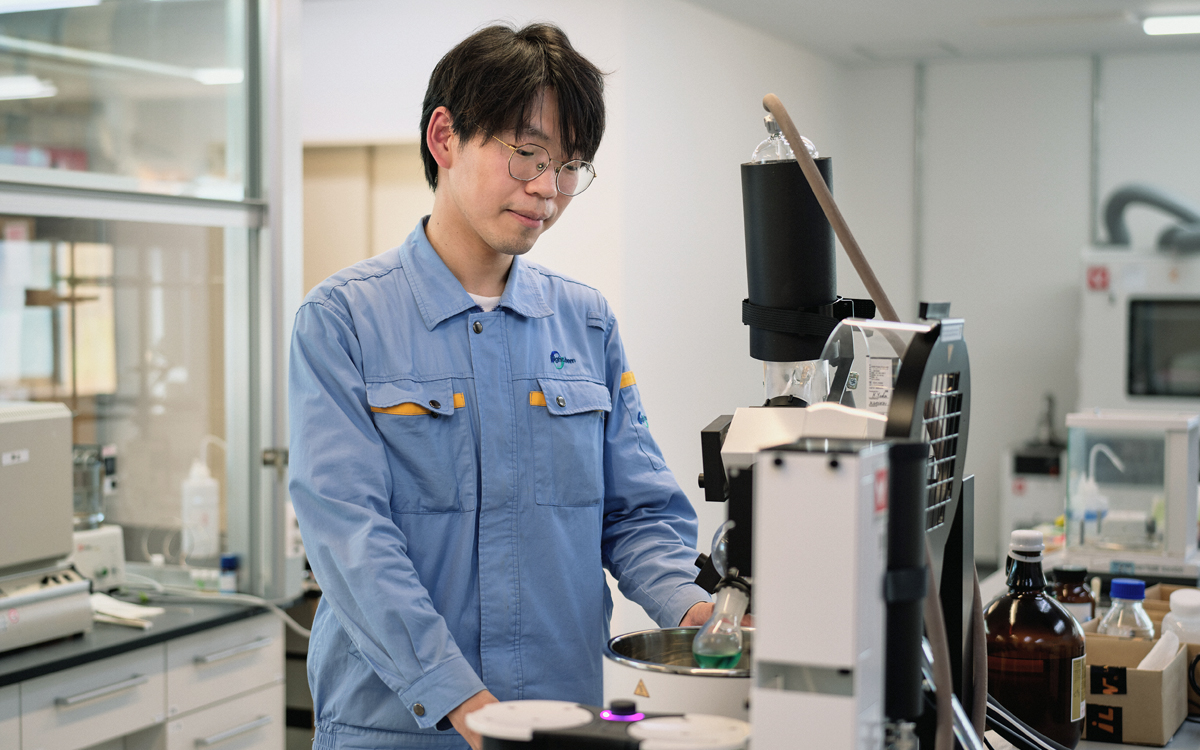
I am a member of the Organic Polymer Team at the Material Research Branch Office of the HighChem Tokyo Research Center, where I am responsible for the R&D of PEF (polyethylene furanoate), a polyester made from 100% biomass-derived materials. PET bottles, which are widely used today, are mainly made from petroleum-derived materials, while PEF is plant-based and offers excellent gas barrier properties. As a material with the potential to contribute to a circular economy, PEF is attracting attention around the world.
What Do You Find Rewarding About Your Work?
Research involves a continuous process of trial and error. After repeatedly experimenting and fine-tuning the conditions, the sense of accomplishment I feel when I finally achieve the target is exceptional. This work requires both persistence and a bit of luck, and I get the desired results only about once in every 100 attempts. That one successful result, however, gives me tremendous motivation to keep going.
What Do You Value Most in Your Work?
The first is “staying optimistic.”
Failure is an inevitable part of research. Even when failures continue, I believe it is important for researchers not to lose confidence, but instead to view every failure as a learning experience, stay positive, and trust that it will eventually lead to a good result.
The second is “prioritizing safety and keeping things organized.”
I always keep my workbench clean and make sure to wear gloves, putting safety first in everything I do. I also find that keeping my workspace organized helps me stay motivated and eager to move on to the next experiment.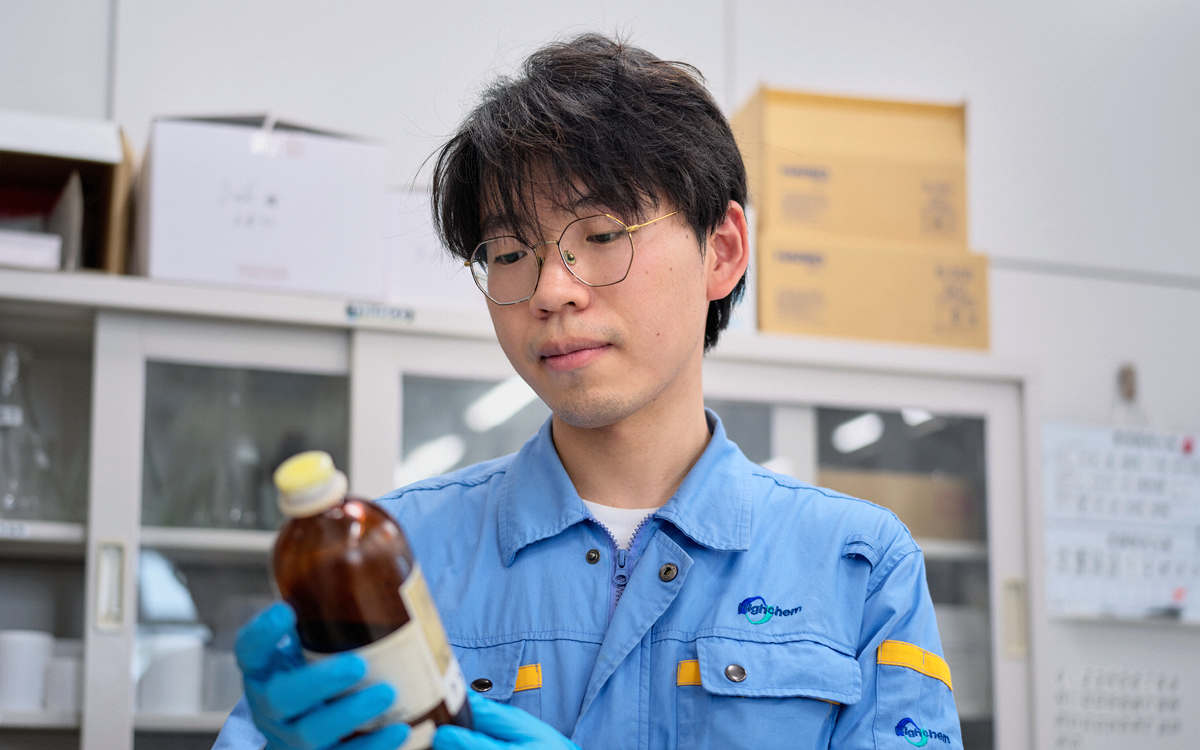
When Do You Feel That You Have Grown as a Professional?
Since all of my team members are Japanese, I communicate in Japanese for most work-related matters. Compared with when I first joined the company, I feel that I have become much better at explaining things clearly, such as reporting experimental results to my supervisors.
I am also planning to take the Japanese-Language Proficiency Test (JLPT) N1 next month. I am currently studying for the exam and working to further improve my Japanese language skills. -
Daily Schedule
- 09:00
- Arrive at the office. Review the day’s research plan, prepare for experiments, and conduct experiments.
- 12:00
- Lunch break
- 13:00
- Clean up and wash experimental equipment. Analyze experimental results and organize data.
- 15:00
- Prepare the research plan for the following day.
- 18:00
- Leave the office
-
workplace
What Is the Culture and Work Environment Like at HighChem?
First, from a researcher’s perspective, I feel that HighChem makes relatively substantial investments in experimental equipment. Compared with the equipment I used at university, I have access to newer instruments here.
Everyone on my team is also very helpful. Whenever I have questions or run into difficulties, they patiently explain everything to me, from how to proceed with experiments to how to operate equipment I have never used before. There is a friendly and approachable atmosphere, and I feel that I can easily ask for advice whenever I need it.
Another thing I find appealing is that there is very little overtime at HighChem, making it easy to maintain a good balance between work and private life.
What Is Your Favorite Employee Benefit?
HighChem frequently holds employee events. I recently participated in a survival game event, which gave me the opportunity to interact with people from other departments, including colleagues in sales whom I do not normally have many opportunities to interact with. I would like to continue taking part in these events whenever I can.